
Review · USA FISHING TRIPS
Hawaiian Reef Spearfishing Lesson for Beginners on Kauai
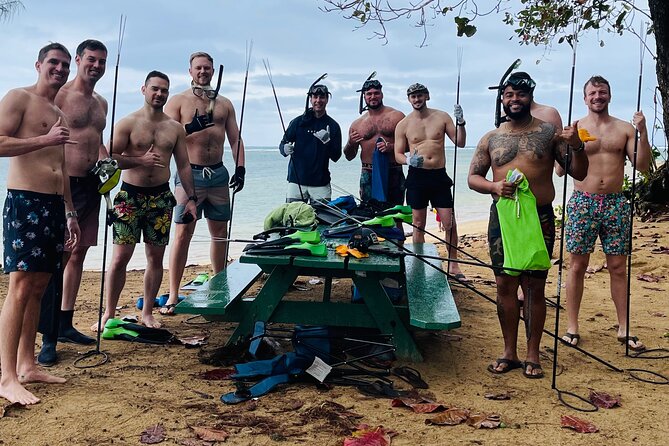
Kauai puts dinner underwater. This three-hour lesson combines a 45-minute shore class with two hours of guided spearfishing around Anini Beach, making it a memorable way to see the reef with a purpose. I especially like the small groups, capped at six, and the chance to learn which fish are native or invasive rather than simply firing at anything that moves.
The instruction is practical, and guides such as Aidden, Christian, and Tui have earned praise for being patient and attentive. I also like that your fish, if you catch one, can go home with you. The main caution is physical: you must already be comfortable swimming and snorkeling, and the current, distance from shore, and one-armed spear can make this much harder than a normal reef tour.
Key points to know before booking
- The lesson starts on land: Expect 45 minutes of instruction covering gear safety, fish identification, spear handling, and responsible fishing.
- The water session lasts about two hours: The group swims from Anini Beach toward outer reef areas where fish are more plentiful.
- You need your own fins: Snorkeling gear and a traditional three-prong spear are supplied, but fins are not.
- There is no catch guarantee: Some people bring home fish, while others enjoy turtles, eels, rays, coral, and reef fish without landing anything.
- The group is small: A maximum of six participants allows for personal help, though you may spread out while hunting.
- Budget an extra $20: Non-residents need a Hawaii recreational ocean fishing license for 24 hours.
What makes this Kauai activity different
Many reef outings ask you to float above the fish and look. This lesson gives you a task. You learn to watch fish behavior, control your body in the water, hold a spear under tension, and decide when a shot is appropriate.
That makes the outing feel closer to a traditional island skill than a standard sightseeing trip. It also comes with a useful lesson in restraint. The goal is not to take as many fish as possible. You learn to identify species, follow responsible practices, and understand that seeing a fish does not mean you should spear it.
The operator presents this as a beginner lesson, not a catch-and-cook guarantee. That distinction matters. You may bring home dinner, but you may also spend the entire session practicing shots and watching marine life. I consider that a fair approach, especially for a first attempt.
The activity costs $125 per person. Add the $20 non-resident fishing license, plus your own fins, food, water, sunscreen, and transport to Anini Beach. That is not a bargain-bin beach activity, but the price includes instruction, snorkeling equipment other than fins, a three-prong spear, and a long guided session in the water.
For someone who wants to learn a skill and not just spend an hour floating near shore, the value is solid. If your only aim is to see turtles, a less demanding snorkeling outing may suit you better.
More Spearfishing Trips in the USA:
- Experience Spearfishing in Miami with a Guide
★ 5.0 · 6 reviews - Discover Spearfishing course
★ 5.0 · 57 reviews - Spearfishing in Chania, Crete (price is per group)
★ 5.0 · 17 reviews
The 45-minute shore class at Anini Beach
You meet at 4241 Anini Road in Kilauea at 9:30 a.m. The meeting point is at Anini Beach, and the outing ends there as well. You arrange your own transport, so allow time to find the location and prepare before the start.
The land lesson is important. Spearfishing looks simple until you hold the equipment, manage a snorkel, watch moving fish, and try to stay calm in shallow water. The guide reviews how to use the gear and demonstrates the traditional three-prong spear before you enter the ocean.
You also learn to identify native and invasive reef fish. That is more than a side note. Knowing what you are looking at helps you fish responsibly and gives the underwater portion more meaning. Instead of seeing a blur of silver shapes, you begin sorting the reef into species and habits.
Use this time to ask direct questions. If you are nervous, say so before getting in. A guide can explain how the spear works, how the group will spread out, and what to do if you tire in the water.
The teaching style has been a strong point, especially with Aidden, who has been described as patient, friendly, and encouraging. Christian has also received praise for taking time with beginners and choosing areas suitable for people who are new to spearfishing. Tui has been singled out for helping a nervous first-time snorkeler feel at ease.
Names can vary by date, but the important point is that the instruction is not simply a quick safety briefing. You get a real introduction before the hunt begins.
Entering the Anini reef and swimming beyond shore
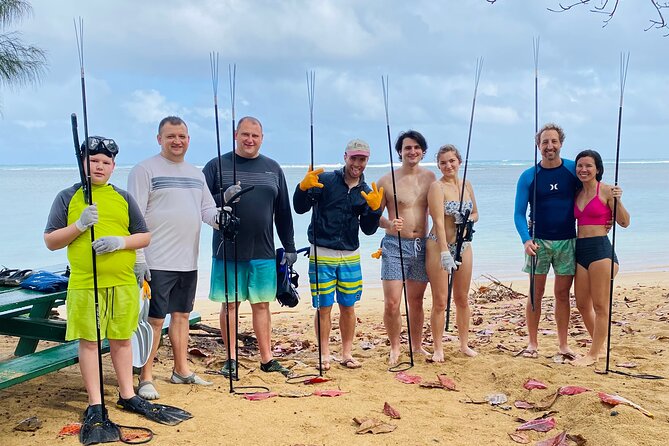
After the lesson, you put on the supplied snorkeling equipment and enter the water. Bring your own fins, because they are required and not provided.
The swim to the reef can be the toughest part. One account describes going roughly three football fields from shore before reaching the best fishing area. Other outings have stayed in water around five feet deep. Those details are not contradictory: depth and distance can change with the route, tide, conditions, and fishing area.
You should be proficient at swimming and snorkeling before booking. This is not a good place to learn how to breathe through a snorkel for the first time. Some participants have found the current tiring, particularly when swimming out and back with basic fins.
Tide timing also matters. One participant found low tide more difficult because of the route over shallow reef. You may want to check the conditions before committing to the morning, then ask the operator if anything looks unusual.
The guide keeps the group in a shallow area when possible, but you still need stamina. You might be in the water for 90 to 120 minutes, and holding the spear ready can fatigue your dominant arm. The spear works much like a slingshot, so maintaining tension while waiting for a fish to line up takes strength.
That physical side is easy to underestimate. You do not need to be an athlete, but you do need comfort in open water, enough stamina to swim against some resistance, and the ability to manage snorkeling equipment while carrying a spear.
Two hours of reef hunting and snorkeling
Once you reach the fishing area, the guide demonstrates the process again and helps you get started. Then you begin moving slowly across the reef, watching fish and choosing possible targets.
The group may spread out by 50 to 100 yards. That gives each person room to practice, but it also means you should pay attention to the guide’s directions and stay aware of your position. If you prefer constant one-on-one attention, a very small booking would be better than a full group.
The underwater scenery can be rewarding even when your aim is off. You may see reef fish, coral, sea cucumbers, turtles, eels, and possibly a manta ray. Several outings have been enjoyable without a catch, because the snorkeling alone offers plenty to watch.
Do not judge your success by the first few attempts. The spear takes time to control, and fish do not politely pause while you line up a shot. One useful mindset is to treat the activity as snorkeling with a purpose. You are practicing a new skill while paying close attention to the reef.
The guide may catch a fish to demonstrate proper technique. Aidden has reportedly landed one quickly during a demonstration, while also explaining that it took him several outings to catch his first fish. That is a helpful reality check. Even an experienced guide can make it look easier than it feels.
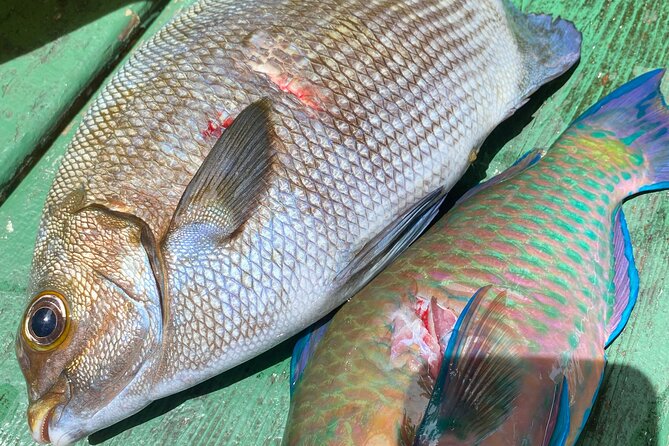
You may get lucky and take a fish home. Some families have caught more than one and later cooked them that evening. The guide can bag the catch, and some guides have also cleaned or processed fish and offered cooking suggestions. Still, the stated focus is instruction and sustainable practices, not a guaranteed meal.
If you do not catch anything, you have not failed. You still receive the lesson, practice the technique, and spend time around one of Kauai’s reefs. Go in expecting to learn, and a fish becomes a pleasant bonus.
More Reef and Bottom Fishing Trips in the USA:
- 4-Hour Day or Night-Time Reef Bottom Fishing Charter in Fort Lauderdale
★ 4.5 · 365 reviews - Key West 6-Hour Party Boat Fishing Trip – Affordable Reef Fishing
★ 4.5 · 325 reviews - 3-Hour Honolulu Bottom Fishing Adventure
★ 4.5 · 320 reviews - 3-Hour Honolulu Bottom Fishing Adventure
★ 4.6 · 25 reviews
The final 15 minutes and your catch
The last part of the outing takes place back at the meeting point. Allow about 15 minutes for team photos and questions.
If you catch a fish, the guide bags it so you can take it home. Some guides have cleaned the catch and shared simple preparation advice, but you should not assume a full cooking demonstration or meal is included. Bring a cooler or another suitable way to handle the fish if you plan to keep it.
The activity is not designed around a formal catch-and-cook meal. That is worth repeating because the phrase spearfishing can create the wrong expectation. The reward is learning how to fish in the ocean and gaining a better understanding of reef life. Dinner is possible, not promised.
How difficult is beginner spearfishing?
The word beginner describes the lesson, not the physical demands. You need a strong fitness level, comfort with snorkeling, and enough swimming ability to handle the route to the reef and the return trip.
The most common challenges are clear:
- Swimming against current or wave resistance
- Using a snorkel for an extended period
- Holding the spear under tension with one arm
- Staying alert while moving through shallow reef
- Managing your energy over up to two hours in the water
Good fins will help. You need to bring them, and inexpensive fins may work, but stronger dive-style fins can make the swim less tiring. You should also bring reef-safe sunscreen, though sunscreen itself is not supplied, along with water and snacks.
Wear sun protection that works in the water. A rash guard or other protective clothing can help, since you may spend much of the morning exposed to the sun. These items are not included, so pack them before leaving your accommodation.
Families and teens can enjoy this if they already swim and snorkel well. Couples, solo participants, and adventurous groups also fit the activity. It is less suitable for anyone uneasy in open water, out of practice with snorkeling, or hoping for a gentle beach morning.
What you pay for, and what you still need
At $125, the cost covers more than equipment rental. You are paying for a shore lesson, guided water time, a traditional three-prong spear, snorkeling equipment except fins, fish identification, and instruction in responsible practices.
The group limit of six improves the odds of getting useful help. It does not mean your guide will hover over every person every second, especially once the group spreads along the reef. Ask for help when you need it, and make your comfort level clear during the opening lesson.
Your extra costs and preparations include:
- A Hawaii recreational ocean fishing license, $20 for non-residents for 24 hours
- Your own fins
- Transportation to and from Anini Beach
- Water and snacks
- Sunscreen
The license is obtained through the Hawaii Department of Land and Natural Resources website. Do this before the activity rather than leaving it until the meeting time.
Free cancellation is available up to 24 hours before the 9:30 a.m. start. If poor weather cancels the outing, you can receive another date or a full refund. The same applies if the minimum number is not reached.
Who should book this Anini Beach lesson?
I would recommend it to you if you already enjoy snorkeling and want a more active way to see Kauai’s reef. It suits people who like learning by doing, do not need a guaranteed catch, and are happy to spend a long morning in the water.
It is especially appealing for:
- Couples looking for something beyond standard sightseeing
- Families with strong swimmers and older children or teens
- Solo participants who want to try a traditional ocean skill
- Adventurous visitors who enjoy fishing, snorkeling, or hunting sports
- Anyone curious about native and invasive Hawaiian reef fish
I would think twice if you are not comfortable swimming several football fields from shore, if current makes you anxious, or if you dislike carrying equipment while snorkeling. The outing can be physically demanding, and one participant felt it was too strenuous.
I would also avoid booking it solely because you expect to eat fish that night. Some people catch fish and enjoy a fresh meal. Others take home nothing but good stories and a better understanding of the reef.
Should you book the Hawaiian Reef Spearfishing Lesson?
Book it if you want a small-group, hands-on Kauai activity and already feel at home in the water. The patient teaching, local reef setting, chance to see turtles and other marine life, and possible catch make this one of the more distinctive ways to spend a morning on the island.
Bring quality fins, check the tide, pack water and sun protection, and set your expectations correctly. You are buying instruction and time on the reef, not guaranteed seafood.
If you accept that tradeoff, the $125 price is reasonable. You may catch dinner, but the lasting benefit is learning a skill you can carry into future Hawaiian trips.
FAQ
Where does the spearfishing lesson meet?
The meeting point is 4241 Anini Road, Kilauea, Hawaii 96754, at Anini Beach. The activity ends back at the same meeting point.
What time does the activity begin?
The lesson begins at 9:30 a.m. and lasts approximately three hours.
Are fins included?
No. Fins are required, but you must bring your own. Snorkeling equipment other than fins and a traditional three-prong spear are provided.
Do I need a fishing license?
Yes. Hawaii requires out-of-state participants to have a recreational ocean fishing license. A 24-hour license costs $20 and can be obtained through the Hawaii DLNR fishing website.
Do I need previous spearfishing experience?
No previous spearfishing experience is required. You receive a 45-minute shore lesson before the guided water session. You must, however, already be proficient at swimming and snorkeling.
Will I definitely catch a fish?
No. The lesson focuses on instruction and sustainable practices, and there is no guaranteed catch. If you do catch a fish, the guide will bag it for you to take home.
What happens if the weather is poor?
The activity requires suitable weather. If it is canceled because of poor conditions, you will be offered another date or a full refund.
More Hands-On Sessions in the USA
- 3 Hour Fishing Experience/Class in Juneau
★ 4.5 · 98 reviews - Half Day Fly Fishing Lesson on Clear Creek near Denver
★ 5.0 · 2 reviews - Cooking Class Hoi An:Local Market, Basket Boat, Fishing & Cooking
★ 5.0 · 3,660 reviews - Hoi An Cooking Class(Market,BasketBoat Crabfishing&Cooking Class)
★ 5.0 · 3,386 reviews
Just added around the USA
- Wasilla: Ice Fishing Experience★ 5.0 · 2 reviews
- Private High Country Fly Fishing Adventure★ 5.0 · 8 reviews
- Private Full Day Fly Fishing For Beginners and Experienced Anglers★ 5.0 · 21 reviews
- Family Fun Private Half Day Fly Fishing Adventure★ 4.5 · 7 reviews
- Yellowstone Full Day Wade Fishing Trip★ 5.0 · 4 reviews
- Full Day Private Fly Fishing in Yellowstone★ 5.0 · 6 reviews
- Peacock Bass Fishing Trips near Palm Beach Florida★ 5.0 · 9 reviews
- Peacock Bass Fishing Trip near West Palm Beach★ 5.0 · 8 reviews
USA Fishing Trips, compared.
Drift Fishing Trip off the Coast of Fort Lauderdale
Read our review →
Fairbanks Ice Fishing Expedition in a Heated Cabin with Fish Cookout
Read our review →
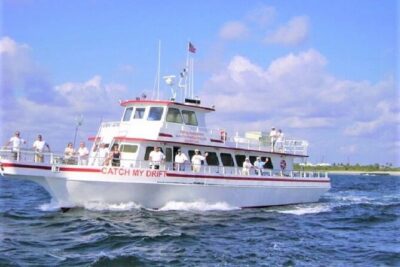
4-Hour Day or Night-Time Reef Bottom Fishing Charter in Fort Lauderdale
Read our review →
Browse the lists this tour appears in